
Tires
Studded vs. Studless Winter Tires: Real Tradeoffs
Studs help most on smooth ice near freezing. Studless tires keep up on snow and run quieter, without the noise and wear studs add on bare pavement. Which set fits depends on how much ice you really drive on.
The short version
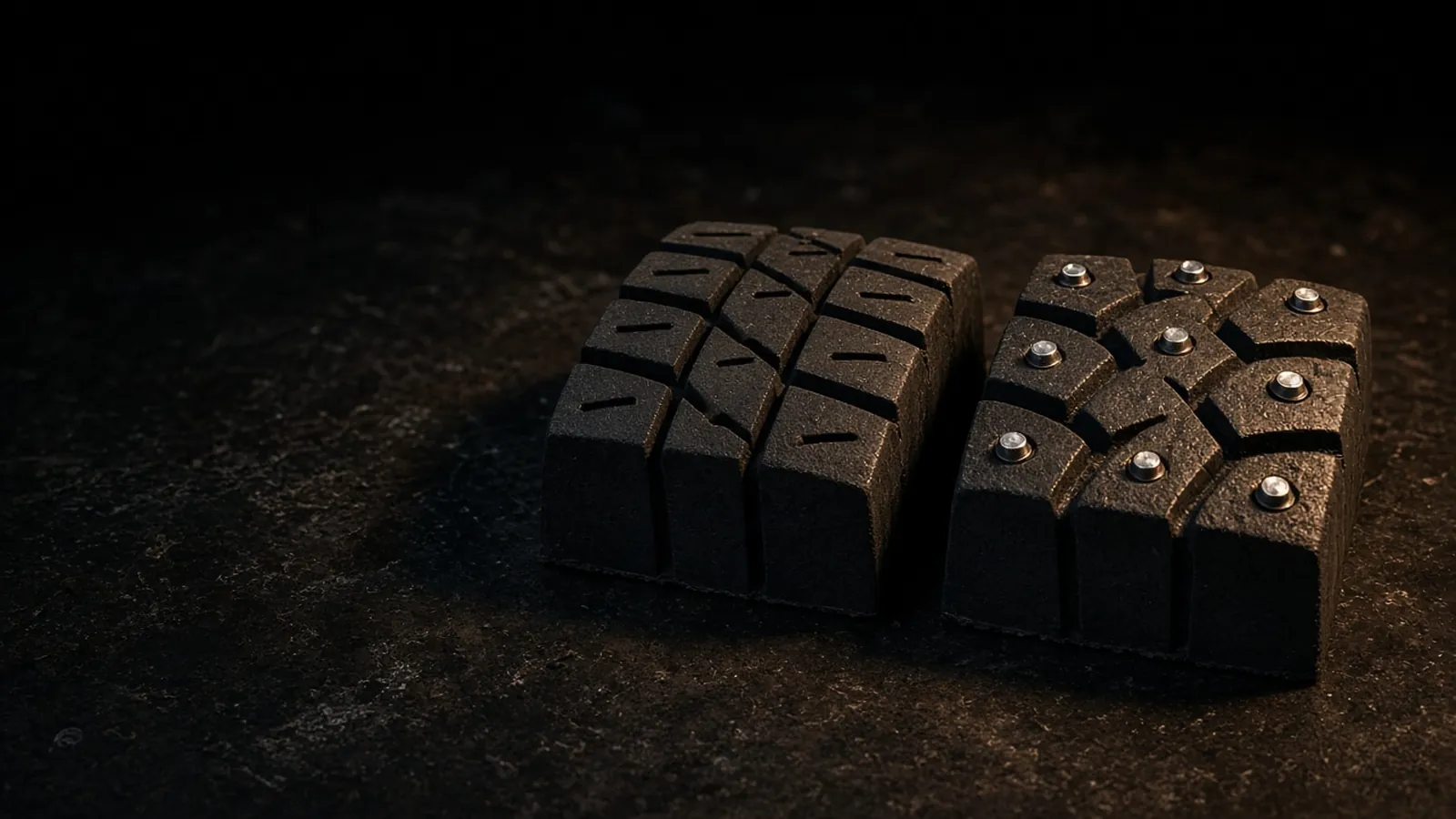
- Studded: small metal pins in the tread. Their edge is on smooth ice near freezing, according to a Washington State DOT review and Alaska DOT&PF.
- Studless: rubber and tread design only. In the 1990s Fairbanks tests below they matched studded tires on packed snow and stopped a bit longer on ice. Michelin says studs add noise, wear, and braking distance on dry pavement.
- Before you buy studs: think about how much ice you actually drive on. Our winter tires guide covers when to swap.
How do studded and studless winter tires work?
Both start with the same idea: a soft rubber compound that stays flexible in the cold, and a tread pattern designed for snow. Transport Canada says, “Winter tires keep their elasticity and grip at much lower temperatures.” What differs is how each one handles smooth ice.
Studded tires add metal. Michelin describes studs as “small metal pins in the tread to provide extra grip on icy roads.” Studless tires have no metal. Michelin says its X-Ice Snow uses “two types of full-depth 3D sipes” for a claw effect on snow and ice. A 2019 Alaska DOT&PF report describes Bridgestone’s Blizzak as using “a multi-cell rubber compound with microscopic pores” to provide traction on ice.
Ice vs. bare pavement: where does each tire win?
Studs win on smooth ice near freezing. In the Washington review's data, studless was as good or better almost everywhere else. The Washington State DOT review says studded traction is “slightly superior to studless tires only under an ever-narrowing set of circumstances,” mainly clear ice near the freezing mark.
| Surface | Studded | Studless (Blizzak) |
|---|---|---|
| Packed snow | 64 ft (20 m) | 64 ft (20 m) |
| Ice, mostly near freezing | 106 ft (32 m) | 118 ft (36 m) |
| Bare pavement (one pickup only) | 17 ft (5 m) | 16 ft (5 m) |
Source: Washington State DOT review (Scheibe, 2002), Table 16, citing Lu et al. (1995). These are mid-1990s tests on 1990s vehicles, and tire designs have changed, so read them for direction, not size.
Alaska DOT&PF says: “On smooth ice near the freezing mark, when studs are new, they perform well. As the temperature drops, or as the studs wear, their effectiveness diminishes.”
Not everyone agrees on how big the ice gap is. Nokian, which sells both kinds, says studded tires are “superior to non-studded winter tires on wet ice and hard-packed snow” and are the better pick if you drive more on ice than on snow. The packed-snow numbers above do not show a gap, so treat that as the maker’s view.
Noise, tread wear, and the road surface
On bare pavement, studs cost you. Michelin says studded tires are “not ideal on dry pavement because they increase noise, wear, and braking distances.” Nokian says that if you want quiet on bare roads, non-studded tires are the right choice. We found no decibel figures from a primary source, so we do not quote one.
The studs themselves wear. The Washington State DOT review found that once a stud sticks out only about 0.024 inch (0.6 mm), its effect on friction is negligible, and studded tires may lose more traction over time than studless ones. Alaska DOT&PF says studless tires “maintain similar performance characteristics as they wear.”
Studs also wear the road. Alaska DOT&PF calls studded tires “a significant cause of pavement rutting in Alaska.” The Washington review says ruts can cause tramlining, hydroplaning in water that collects in them, and more spray. The same review notes that studs roughen ice, which can help keep it from becoming smooth glare ice.
What about price?
The sources disagree, and none is recent. The 2002 Washington State DOT review, based on an informal Seattle-area price check, put studless tires about 50 percent above studded. A 2019 Alaska DOT&PF report, in its policy discussion and without citing prices, says replacing studded tires with studless is “similar in cost and safety benefits for the consumer,” while its companion technical brief calls studless tires “only slightly more expensive.” Prices vary by size and brand, so get quotes for your own size.
How do you choose for the way you drive?
- Mostly plowed, sanded, or bare roads: studless. It is quieter and avoids the noise and wear studs add on bare pavement. Nokian also says studless tires can go on earlier in the fall; our winter tires guide covers timing.
- Frequent ice, such as wet ice at intersections and bends, or freeze-thaw weather near 32°F: studs have the most to offer. Nokian says to choose studs if you drive more on ice than on snow, especially near the coast.
- Deep cold: the Washington review says studded tires lose proportionally more traction than studless as temperatures fall, so studs give up their edge.
What have I run, and what do I think?
This is opinion and one driver’s experience, not a test.
Quick questions
Are studded tires worth it?
Only where ice is a regular problem. Studs help most on smooth ice near freezing. On packed snow they matched studless tires in the Fairbanks tests, and on dry pavement Michelin says they increase noise, wear, and braking distances.
Are studless tires good on ice?
Good, but studs stop shorter on ice near freezing. In the 1990s Fairbanks tests studless tires averaged 118 ft from 25 mph against 106 ft for studs. Alaska DOT&PF describes studless tires as “good on ice, great on snow.”
Do I need studded tires on all four wheels?
Yes, for the best result. Michelin says to fit winter tires on all four wheels, even on AWD or 4WD. The Washington review, citing 1990s Alaska tests, found that studs on only the front two gave stopping results about halfway between four studs and four all-season tires, and it flagged yaw instability.
How loud are studded tires?
Louder on bare roads. Michelin lists noise as a drawback, and Nokian recommends non-studded tires if you want quiet. We did not find a primary-source decibel figure.
Can I leave studless winter tires on all year?
Nokian does not recommend it. It says coarse spring roads wear non-studded winter tires unevenly and that a good all-season tire is the better summer choice. Our winter tires guide covers when to swap.
When should I replace winter tires?
Transport Canada says not to use tires worn close to 4 mm (5/32 inch) of tread on snow-covered roads. On studded tires, the Washington review found the studs’ effect becomes negligible once they stick out about 0.6 mm.
Studs earn their keep on smooth ice near freezing, and they cost you noise and wear on bare pavement. If ice is a regular part of your winter, studs are worth considering. If your roads are mostly snow and bare asphalt, a good studless winter tire covers most of it.
Sources
- Washington State DOT, An Overview of Studded and Studless Tire Traction and Safety (R. Scheibe, report WA-RD 551.1, Oct. 2002; includes Fairbanks stopping-distance tests from the mid-1990s)
- Alaska DOT&PF, Economic Analysis of Pavement Impacts from Studded Tire Use in Alaska (technical brief, 2019; read for its tire-performance and rutting statements only)
- Alaska DOT&PF / University of Alaska Anchorage, Survey and Economic Analysis of Pavement Impacts from Studded Tire Use in Alaska (O. Abaza et al., May 2019; read for its tire descriptions and consumer-cost statement only)
- Michelin USA, Summer vs. Winter vs. All-Season Tires (M+S is not winter certification; winter tires on all four wheels, including AWD/4WD; updated Nov. 12, 2026)
- Michelin USA, Michelin X-Ice Snow (studless winter tire; full-depth 3D sipes)
- Nokian Tyres, Studded or non-studded winter tires? (May 2, 2024; the maker sells both kinds)
- Transport Canada, Using winter tires (elasticity below 7°C; sets of 4; 4 mm / 5/32 in. tread caution)
Facts last checked against these pages on November 28, 2026. Product details and prices can change, so confirm anything that affects a purchase.